



Surgeon Simulator















Step into the madness of Surgeon Simulator and test your nerves, precision, and humor in the most unpredictable operating room ever created.
What is Surgeon Simulator?
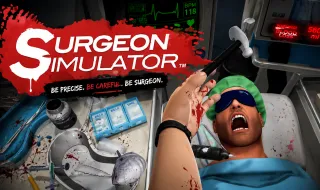
Surgeon Simulator is a physics-based simulation game that transforms serious medical procedures into chaotic, often hilarious challenges. Rather than offering smooth, realistic controls, the game intentionally gives you awkward, difficult-to-manage hands, making even simple actions—like picking up a scalpel—surprisingly tricky.
You play as a surgeon tasked with performing operations such as heart, brain, and eye transplants. The twist is that each finger is controlled individually, while the physics system introduces unpredictable movement. As a result, surgeries quickly become messy, stressful, and entertaining at the same time.
Core Gameplay
Your primary objective is to replace or repair organs before the patient loses too much blood. Each procedure follows a clear structure: remove the damaged organ, insert a new one, and stabilize the patient. However, success is complicated by fragile tools, time pressure, and rapidly decreasing vitals.
Precision is important, but adaptability matters just as much. You will need to:
- Carefully pick up and manipulate tools using individual finger controls
- Remove obstacles such as ribs or sections of the skull
- Monitor blood levels and respond quickly when complications arise
- Improvise when tools are lost or fail
Controls
- Each finger is controlled separately, making it difficult to grip objects
- The hand must be rotated and positioned manually
- Movements are physics-based, often producing unexpected results
- Even simple actions require patience and coordination
Why It Stands Out
- Clumsy controls as the core challenge: The difficulty lies in handling tools, not medical knowledge
- Physics-driven chaos: Objects react unpredictably, creating unexpected (and often ridiculous) situations
- Creative freedom: Both proper instruments and unconventional tools can be used to complete surgeries
- Humor over realism: Mistakes aren’t just failures—they’re part of the fun
Other Simulation Games
